

Introduction
Fatty liver disease often develops quietly. Many people live with it for years without knowing because early symptoms are mild or easy to ignore.
Over time, symptoms can become more noticeable. Knowing the early and advanced signs helps people seek medical care before serious liver problems develop.
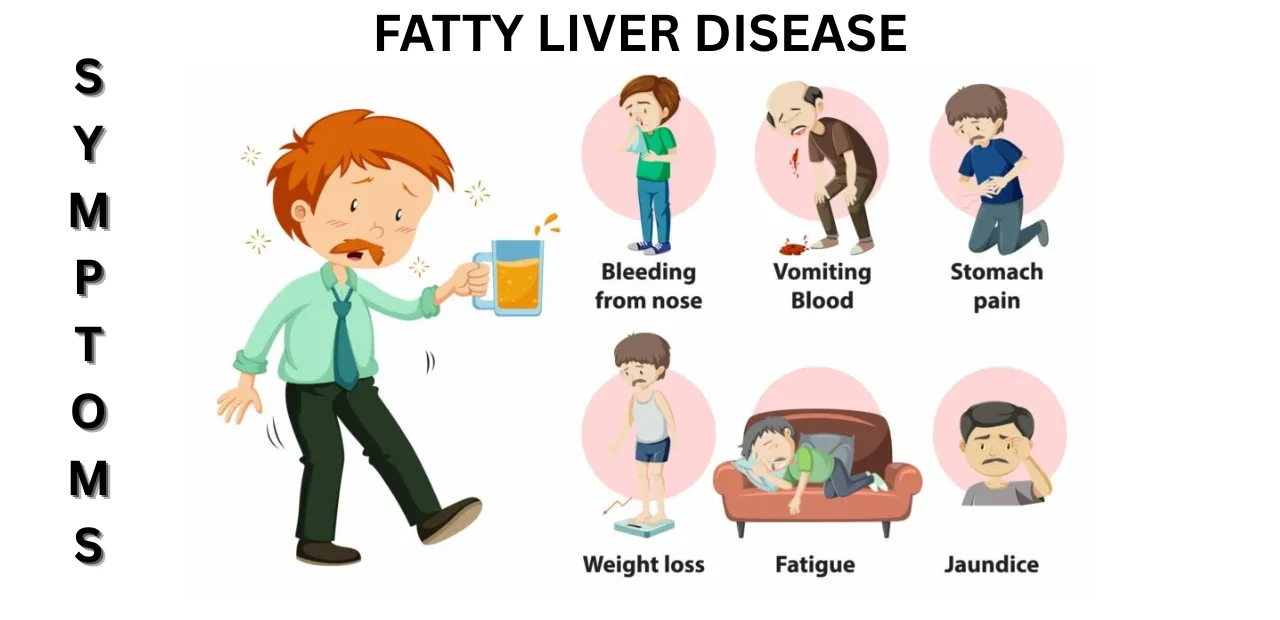
Table of Contents
Early Symptoms of Fatty Liver Disease
Mild fatigue and low energy
One of the earliest signs is feeling tired more often than usual. This fatigue may not improve even after proper rest.
General discomfort
Some people notice a dull or uncomfortable feeling on the upper right side of the abdomen. It is usually mild and comes and goes.

Digestive Symptoms Linked to Fatty Liver Disease
Bloating and nausea
Bloating after meals and mild nausea are common digestive complaints. These symptoms may worsen after heavy or fatty foods.
Changes in stool
Some people notice changes in stool color or consistency. While this can have many causes, ongoing changes should be checked by a doctor.

Symptoms That Appear as the Disease Progresses
Abdominal swelling
As fatty liver disease advances, fluid buildup in the abdomen may occur. This usually signals the need for immediate medical attention.
Yellowing of skin or eyes
Jaundice, or yellowing of the skin and eyes, can appear in advanced liver disease. This is a serious sign that should never be ignored.

Fatty Liver Symptoms in Different People
Symptoms in non-obese individuals
Fatty liver disease does not only affect overweight individuals. Even people with normal weight may experience fatigue, digestive issues, or abnormal test results.
Symptoms during pregnancy or illness
Hormonal changes or existing health conditions can make symptoms more noticeable. Medical monitoring becomes especially important in these situations.

When Symptoms Should Not Be Ignored
Signs that need urgent care
Severe abdominal pain, persistent vomiting, confusion, or extreme weakness require immediate medical evaluation.
Importance of early diagnosis
Catching fatty liver disease early often allows better management and helps reduce the risk of long-term complications.
Conclusion
Symptoms of fatty liver disease range from mild fatigue to more serious signs as the condition progresses. Because early symptoms are often subtle, many people do not realize they have a liver issue until tests reveal it. If you notice ongoing fatigue, digestive problems, or abdominal discomfort, consult a healthcare professional. Early evaluation and proper guidance can help manage fatty liver disease and protect long-term liver health.
Frequently Asked Questions
What are the most common symptoms of fatty liver disease?
Fatigue, abdominal discomfort, bloating, and mild digestive problems are commonly reported.
Can fatty liver disease have no symptoms?
Yes. Many people have fatty liver disease without noticeable symptoms, especially in early stages.
Does fatty liver disease cause pain?
It can cause mild discomfort, usually on the right side of the abdomen, but severe pain is uncommon in early stages.
Are digestive problems linked to fatty liver disease?
Yes. Bloating, nausea, and appetite changes can occur, though these symptoms may also have other causes.
When should I see a doctor for symptoms?
If symptoms persist, worsen, or include jaundice or abdominal swelling, medical evaluation is strongly advised.