Skip to content
At Liver Care Center, we provide expert pancreatic cancer treatment in Pakistan. We utilize more sophisticated surgical methods for pancreatic cancer, ensuring advanced care. Our team is led by Dr. Muhammad Zakria, a distinguished Hepatobiliary surgeon with international training. Patients receive personalized care that consistently yields high success rates in managing pancreatic conditions. Our modern facilities are equipped for precise diagnosis and treatment of pancreatic cancer.
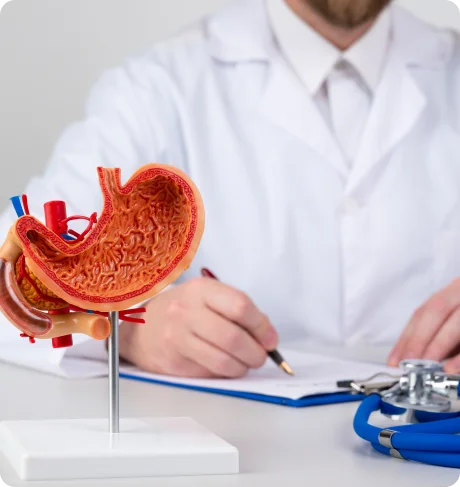
The pancreas functions as a vital glandular organ, strategically residing behind the stomach. This crucial organ is responsible for manufacturing digestive enzymes and meticulously regulating blood sugar levels through insulin and glucagon.
Pancreatic cancer develops through the uncontrollable spread of atypical cells throughout the pancreatic tissue masses. Unfortunately, pancreatic cancer symptoms often manifest slowly, with patients only showing noticeable signs in the later phases of the disease. Pancreatitis can sometimes be a risk factor for pancreatic cancer. While the exact causes of pancreatic cancer are still being researched, the effectiveness of pancreatic disease management in Pakistan relies heavily on early detection and appropriate pancreatic cancer treatment in Pakistan.
Our expert medical team considers three primary surgical procedures depending on tumor location and type: Whipple surgery, distal pancreatectomy, and total pancreatectomy. We perform safe and accurate surgical procedures using modern surgical approaches. Early action saves lives; contact us for a consultation.
Pancreatic Ductal Adenocarcinoma (PDAC):
This is the most common form of adenocarcinoma pancreatic cancer, arising from cells that line the pancreatic ducts. Due to their aggressive nature, doctors need to immediately provide both diagnosis and surgical intervention.
Ampullary Cancer:
This digestive cancer develops at the area in the small intestine where pancreatic and bile ducts connect. The early detection of this tumor becomes possible because a blocked bile duct often leads to jaundice symptoms.
Cystic Pancreatic Tumors:
These fluid-filled cancers in the pancreas have the potential to transform into malignant tumors. Medical intervention or surgical procedures become necessary because mucinous cystadenomas are known to progress into cancerous growths.
Acinar Cell Carcinoma:
Very few cases exist in which the enzyme-producing cells become affected. Patients with this condition often manifest atypical symptoms because their bodies produce too many enzymes that lead to fat deposition throughout the body.
Pancreatic Neuroendocrine Tumors (PNETs):
These tumors appear with low frequency because they originate from the pancreatic hormone-producing cells within this organ. The tumor growth rate is generally slower, but these cancer types produce hormones that result in symptoms of low blood sugar, often accompanied by flushing effects.

You may need more time to identify these pancreatic cancer symptoms as non-serious because they look similar to minor illnesses. Seek immediate medical attention once you detect these early signs of pancreatic cancerparticularly yellowing skin tones (jaundice), acute weight changes (unexplained weight loss), or chronic stomach pain. Patients need to receive a diagnosis early to benefit from pancreatic cancer surgery treatments. Visit your pancreas doctor in Pakistan right away to receive a timely assessment and custom treatment. Significant medical action now will benefit your well-being.
Pancreatic cancer exists as a silent disease since noticeable symptoms emerge mostly during the advanced stages of the disease. Diagnosing pancreatic cancer at earlier stages remains possible if you detect warning signals in time. You need to seek immediate assistance from a specialist who can provide pancreatic cancer treatment in Pakistan when the following symptoms become persistent:
Unexplained Weight Loss: Pancreatic cancer often produces issues in the digestion and absorption of nutrients, causing significant unexplained weight loss in patients.
Jaundice (Yellowing of Skin and Eyes): As a tumor clogs the bile duct,(symptom of pancreatic cancer) , bilirubin begins to build up in the body, leading to jaundice.
Abdominal Pain: The upper abdomen may experience dull or sharp pain which often extends to the back area, worsening post-meals or when lying down.
Loss of Appetite: An unusually fast onset of fullness combined with losing interest in food often results in malnutrition and creates weakness.
Digestive Issues: The lack of enzyme production leads to persistent bloating along with nausea and vomiting, often accompanied by foul-smelling fatty stools known as steatorrhea.


Doctors must use several test methods to accurately find pancreatic tumors and determine how far the cancer has spread. .For cases of stage 4 pancreatic cancer, a combination of diagnostic imaging and biopsy is crucial to confirm the extent of the disease and plan for palliative care. Investigations typically begin by taking pictures of the pancreas with CT scans, MRIs, or endoscopic ultrasounds. Blood tests plus a tumor marker called CA19-9 often show cancer activity but need extra tests for confirmation. Doctors often perform a tissue removal procedure (biopsy) and study its details to reach an accurate cancer diagnosis.
Along with this, doctors use ERCP tests to examine how a tumor develops in the bile duct through an endoscopic tool. The appropriate pancreatic cancer treatment in Pakistan requires early diagnosis to determine the best treatment approach between surgery or chemotherapy with targeted therapy options. Seek specialized medical attention right after symptoms develop that require assessment.
Dr. Muhammad Zakria is a renowned hepatobiliary and pancreatic cancer surgeon with extensive expertise in complex pancreatic surgeries. By using modern surgical tools and skillful tumor extraction, he aims to improve the pancreatic cancer prognosis for his patients. During his training across multiple nations, Dr. Muhammad Zakria completed hundreds of pancreatic cancer operations with excellent results and very few patient issues. By using modern surgical tools, he delivers effective results to patients through his skillful tumor extraction. Dr. Muhammad Zakria leads a patient-specific treatment team to support every step of the medical journey for patients. Book an Appointment today for expert care.


Facing pancreatic cancer becomes easier when you understand that complete recovery remains an opportunity. Our staff at Liver Care Center has observed many patients regain their lives through the latest pancreatic cancer treatment and unbreakable courage. Your diagnosis does not determine what lies ahead of you. Our state-of-the-art medical procedures and dedicated care help patients realize their hopes every single day , leading to a significantly improved pancreatic cancer prognosis. Our team supports patients going through the toughest fight against pancreatic cancer.
Our highly skilled team, under the guidance of Dr. Muhammad Zakria, is well-versed in intricate pancreatic cancer surgery, providing outstanding results with customized treatment plans. From accurate diagnosis to thorough aftercare, we offer end-to-end support at each stage. With cutting-edge technology and decades of successful experience, we make cancer treatment accessible and recovery possible. Let us accompany you on this journey – your triumph is our mission.
Our team at Liver Care Center gives patients outstanding pancreatic cancer care through both proven surgical procedures and personal care. Here’s what sets us apart:
Our skilled Dr. Muhammad Zakria leads a team that has performed hundreds of successful pancreatic surgeries. Our team of local doctors shares their skills learned during international training to give exact treatment to every patient. Our medical team gives thoughtful focus to every case to deliver the best results.
Our medical team provides excellent patient results by using modern surgical approaches that lead to improvedpancreatic cancer survival rates. and detailed plans. Our surgical team maintains lower than national standard rates of complications because of our improved medical practices. The team examines results and develops fresh methods to enhance surgery performance.
Our advanced recovery program lets patients leave the hospital sooner and enjoy better comfort. We use up-to-date pain control methods and help patients become active earlier. Personalized exercises in physical therapy let patients become stronger sooner as part of their tailored recovery programs.
A detailed evaluation results in a treatment strategy designed just for each patient. All advanced cancer patients receive a medical evaluation from multiple doctors during tumor board discussions to create the best treatment approaches. Our medical team uses different treatment methods according to how your treatment and recovery perform.
Our unique medical facility offers high-level care for difficult liver and bile duct patients. Our unit houses both an ICU and surgical teams specialized in pancreas treatment who use advanced patient observation technology. The medical team communicates well with each other and supports workers, creating effective patient treatment.
Our teams use modern 3D picture enhancement and robotic technology for the best possible results. Our team now checks the entire cancer during surgery because they see real test results right away. Genomic testing gives us information about proper therapy choices for patients with specific needs.
Our staff regularly checks patients for two years after their surgical treatment. Patients can find problems early because of scheduled tests and examinations. The healthcare team gives patients both eating advice and daily living suggestions to achieve better healing results.
Our team fully explains disease details and chooses treatment paths with patients. Groups help patients talk to survivors who understand the full treatment experience. Having educational materials in the local dialect helps patients comprehend medical instructions better.
Specialist care coordinators handle all appointments and activity arrangements for patients. Our team offers counseling services to both patients and their loved ones. Our 24-hour helpline enables patients to get fast support following their discharge.

The price of pancreatic cancer surgery in Pakistan depends on how difficult the medical procedure is . It’s important to note that surgical options are often limited for stage 4 pancreatic cancer patients, and the treatment plan may focus more on chemotherapy and symptom management to improve quality of life. and the level of care needed after treatment. Though the expense appears substantial, it represents a lower value than gaining more time and better lifestyle quality. Our team at Liver Care Center provides clear treatment prices and payment plans as we want to help you receive essential medical care regardless of your financial difficulties.
You make a wise investment in your health by choosing this surgery because it contributes to your well-being while strengthening your loved ones and future. Patients discover greater advantages than expenses through our top surgical team achieving superior outcomes. Book pancreatic surgery appointment today.
Pancreatic cancer surgery aims to remove all cancerous tissue from the pancreas. Complete removal of the malignant tumor prevents cancer dissemination while making remission possible. The operation stands as the beginning point for your recovery process. The key benefits of pancreatic cancer surgery include:
A surgical procedure aims to remove all cancerous tissue from the pancreas. Complete removal of the malignant tumor wipes out cancer dissemination while making remission possible. The operation stands as the beginning point for your recovery process.
Surgery significantly boosts your long-term pancreatic cancer survival rates when measured over 5 years. The combination of different treatments leads to your best opportunity for cancer stoppage and return of your life quality. A high number of our treated patients lead active lives after their operation.
Debilitating symptoms such as chronic pain along with digestive problems and jaundice will significantly lessen. Your body establishes its natural balance through surgery which returns normal pancreas and bile duct operation.
Your body will rebuild its strength while healing up until you regain total physical vitality. Advanced nutrient absorption with decreased tumor mass helps fight cancer weariness, thus allowing you to regain strength for daily activities.
Medical staff develop individualized care procedures for each individual after surgery. Our procedure includes organized treatment check-ups that merge systematic tests and laboratory assessments to gauge your recovery advancement as well as spot any developing medical problems early on.
The surgical procedure lets us access supplementary treatment approaches when necessary. From oncology teams, we receive seamless integration to manage the chemotherapy-targeted therapy or radiation services which will be included in your total cancer management plan.
Healing encompasses both body and mind. The team members provide psychological care through counseling sessions while guiding victims toward community support groups for emotional recovery assistance.
Return to regain your best health through expert after-surgery treatment which accelerates healing and defends against adverse effects. Our wound specialists employ the latest procedures that both cut down scarring and decrease infection probabilities.
Proper digestive function recovery becomes achievable through nutritional assistance. A customized dietary plan together with enzyme supplements receives professional guidance to help your body build appetite function while absorbing all essential nutrients needed for healing.
Pancreatic cancer patients need proper care as well as patience to recover from pancreatic cancer surgery in a gradual way. Our care center at Liver Care Center provides all the necessary guidance to help patients heal safely with effective results. Here’s what you need to know:
After surgery, patients start recovering by controlling pain levels and beginning to walk. Medical staff closely watches patient progress during their 7 to 14-day hospital stay after surgery. Medically approved breathing practices will start right away to reduce the risk of breathing problems.
During this phase, the doctor supervises the gradual return to light tasks and checks the healing process. Daily light walks help you recover your strength, and you need to follow nutritional instructions. Routine checkups with doctors examine your recovery and resolve your related problems
The patient builds endurance further by taking part in planned physical exercises. The healthcare team tracks digestive performance closely and provides necessary care. Routine screens help make sure the person recovers well and catches health problems before they become serious.
Patients gain freedom to live their daily lives while making some changes to their eating habits. Continuous nutrition assistance ensures better digestive system health. Regular doctor visits help find potential health changes over the years.
Small, regular meals should include protein foods while strictly following your enzyme prescription plan.
You should walk every day, beginning with short distances followed by increased strides.
Monitor the wounds for redness and swelling as well as maintain their dry and clean state.
Follow your medication schedule without exceptions while noting all drug reactions.
Maintain adequate water consumption by drinking eight to ten glasses daily.
Warning signs require quick medical care, including fever along with severe pain or jaundice.
Join support groups along with using relaxation techniques while seeking support from others.
Attend all medical check-ups to complete tests and follow a prescribed care plan.
Your recovery process requires dedicated time, so continue your rehabilitation plan while being tolerant toward the recovery process.
While pancreatic cancer surgery helps patients, it brings known dangers that patients need to be aware of. Our medical team follows proven safety measures to reduce these possible surgery risks.
Pancreatic juices that leak from the surgical connection between pancreatic tissues can develop into an infection. Our team checks and treats leaks from the surgical connection with drainage or medication as required.
Our medical team controls infection risk at both the operation and abdominal area through antibiotic drugs and sterile practices during and after procedures.
We expect minimal bleeding from the operation, but immediate transfusion treatment or further assistance becomes necessary when bleeding exceeds safe limits.
Our trained anesthesiologists check each patient closely to prevent allergic reactions and breathing problems from taking place during treatment.
A few patients may need to stay in the hospital longer to finish their recovery process and manage digestive shifts.
Recovering patients experience fatigue while their body repairs itself, but this feeling subsides when they eat well and start exercising mildly.
Lost pancreas tissue reduces insulin production, which may require treatment either temporarily or permanently.
Our plan includes breathing exercises and movement routines to prevent patients from developing pneumonia or other respiratory problems following surgery.
We stand ready to handle any medical issues at the hospital 24/7, plus teach you how to identify and respond to problems after leaving.
Expertise, together with compassionate treatment, is essential to combat pancreatic cancer. The clinicians at the Liver Care Center combine advanced surgical expertise with dedicated patient care services. Medical patients from the Liver Care Center achieved remarkable life improvements by receiving advanced surgical procedures together with personalized medical support. Here’s what they have to say:
5.0

Dr. Zakria provided professional guidance that gave me hope after receiving the pancreatic cancer diagnosis. The pancreatic cancer surgery achieved its objectives successfully while receiving exceptional postoperative care. I’m grateful for his dedication.

Liver Patient From Lahore
5.0
During my challenging journey, the Liver Care Center team provided continuous support, which rendered the path less demanding. The support that they provided stayed consistent throughout both the diagnosis process and the recovery period. People should choose pancreatic cancer surgical treatment at this facility due to its strong recommendation.
Liver Patient From Islamabad
5.0
I received relief from my symptoms after months of struggle when I came here because Dr. Zakria performed the surgery with great precision and provided compassionate care.
Liver Patient From Faisalabad
5.0
Dr. Zakria’s skill and compassion gave me confidence after my pancreatic cancer diagnosis. The surgery went smoothly, and the team provided excellent care throughout my recovery. I’m grateful I chose this center.
Liver Patient From Lahore
The most effective treatment for pancreatic cancer depends on the stage at diagnosis. In early stages, surgical removal of the tumor. For advanced stages, such as stage 4 pancreatic cancer, a combination of chemotherapy, targeted therapy, or immunotherapy is used to manage symptoms and slow progression.
Yes, recent advances have introduced new treatments for pancreatic cancer, including:
Targeted therapies
Immunotherapy drugs
Personalized medicine based on genetic profiling
Minimally invasive surgical options
Clinical trials are also ongoing, offering hope for more effective and less toxic treatments. Our team stays updated with latest pancreatic cancer therapies available in Pakistan and globally.
To test for pancreatic cancer, doctors may use a combination of the following:
Blood tests (e.g., CA 19-9 tumor marker)
CT scan or MRI
Endoscopic ultrasound (EUS)
Biopsy for confirmation
If you have persistent abdominal pain, weight loss, or jaundice, schedule a consultation with a pancreatic specialist in Lahore for proper testing and diagnosis.
Pancreatic cancer diagnosis involves a multi-step process:
Physical examination & medical history
Blood tests for tumor markers like CA 19-9
Imaging tests such as CT, MRI, or PET scans
Endoscopic ultrasound (EUS)
Biopsy to confirm cancer type and stage
At Liver Care Center, we use advanced diagnostic tools for timely and accurate identification of pancreatic tumors.
You can check for pancreatic cancer by undergoing:
Abdominal imaging (Ultrasound, CT scan, MRI)
Blood tests for markers like CA 19-9
Endoscopic procedures for detailed views
If you’re experiencing unexplained back pain, weight loss, or digestive issues, consult a pancreatic cancer doctor in Lahore to get screened early.
Doctors diagnose pancreatic cancer using:
Clinical symptoms review
Imaging tests (CT, MRI, EUS)
Biopsy to confirm the presence of cancer cells
Tumor marker tests (like CA 19-9)
A timely and accurate diagnosis is crucial for effective treatment, which is why our team emphasizes early detection through comprehensive testing.