

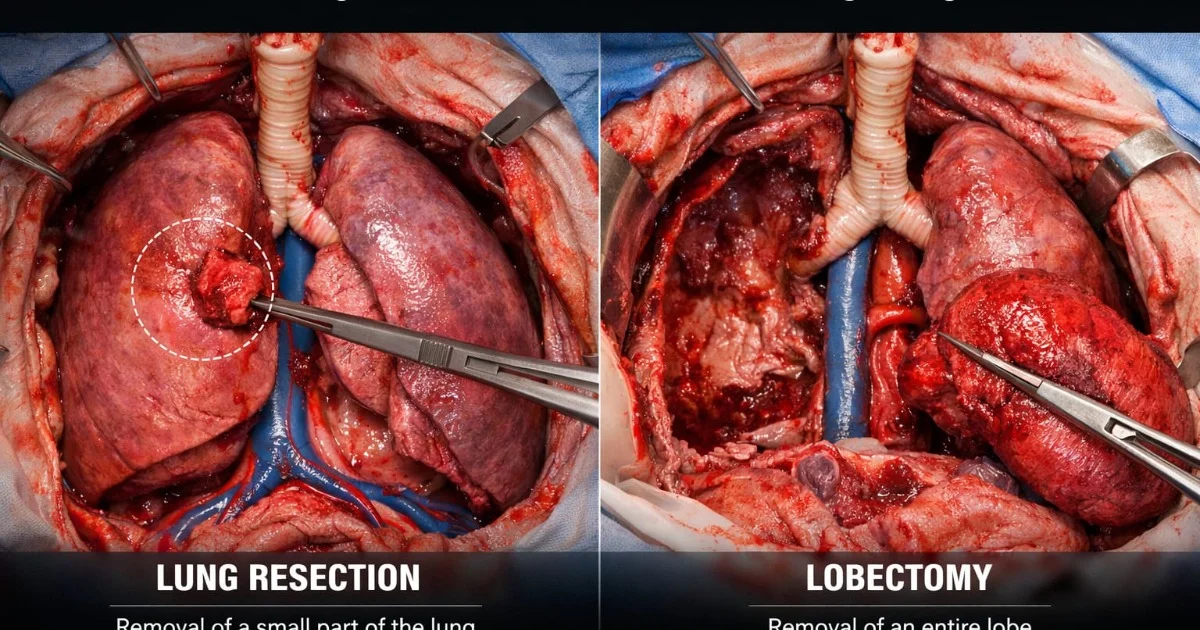
In thoracic surgery, a resection simply means the surgical removal of all or part of an organ. Understanding the nuances of lung resection vs. lobectomy is essential, as “lung resection” is an umbrella term referring to a variety of procedures used to treat lung cancer, trauma, or chronic infections. Depending on the severity of the condition, a surgeon may choose a specific type of resection, such as a wedge resection, segmentectomy, or a full lobectomy.
Table of Contents
What is Lung Resection?
Lung resection is an umbrella term. Depending on how much tissue needs to be removed to ensure the patient’s health, a surgeon will choose one of the following:
Wedge Resection:
Removing a small, pie-shaped piece of the lung.
Segmentectomy:
Removing a larger portion (a segment) of a lobe.
Lobectomy:
Removing an entire lobe of the lung.
Pneumonectomy:
Removing the entire lung.
What is a Lobectomy?
A lobectomy is the most common type of lung resection, especially for early-stage non-small cell lung cancer (NSCLC). The right lung has three lobes, and the left lung has two.
During a lobectomy, the surgeon removes the specific lobe where the tumor is located. This is often considered the “gold standard” because it ensures the cancer is removed while preserving enough healthy lung tissue for the patient to breathe comfortably.
The Role of Liver Care Center & Dr. Muhammad Zakria
While the name Liver Care Center suggests a focus on hepatology, modern medical centers especially those led by specialists like Dr. Muhammad Zakria often provide comprehensive care for thoracic and abdominal pathologies.
Who is Dr. Muhammad Zakria?
Dr. Muhammad Zakria is a well regarded specialist known for his expertise in internal medicine and gastroenterology, often associated with the Liver Care Center. In the context of lung and liver health:
Multidisciplinary Approach:
Often, lung issues and liver issues are interlinked (such as in Hepatopulmonary Syndrome). Specialists like Dr. Zakria ensure that if a patient is undergoing a major surgery like a lung resection, their metabolic and liver health are optimized to handle the anesthesia and recovery.
Diagnostic Precision:
The Liver Care Center (livercarecenter.com) emphasizes advanced diagnostics. Before any lung resection, it is vital to ensure the patient doesn’t have underlying systemic issues that would complicate surgery.
Note: If you are visiting livercarecenter.com, you will find resources focused on liver health, but the clinical philosophy of Dr. Zakria involves treating the patient as a whole, ensuring that surgical candidates for any resection are in peak physiological condition.
Surgical Techniques in Lung Resection vs. Lobectomy: VATS and Robotic Surgery
Whether you are undergoing a wedge resection or a full lobectomy, the method of surgery matters:
Thoracotomy (Open Surgery):
A traditional large incision on the side of the chest.
VATS (Video-Assisted Thoracoscopic Surgery): A minimally invasive technique using small incisions and a camera. This is the preferred method at modern centers due to faster recovery times.
Robotic Surgery:
Similar to VATS but provides the surgeon with higher precision and 3D visualization.
Recovery and Outlook
Post-surgery, patients usually spend a few days in the hospital with a chest tube to drain excess fluid and air.
Breathing Exercises:
Essential to re-expand the remaining lung tissue.

Monitoring:
Follow-ups with specialists (like the team at Liver Care Center for systemic health) ensure that no complications arise. The long-term outlook for a lobectomy is generally very positive, especially if the surgery was performed to remove a localized tumor. Most people can return to their normal activities without needing supplemental oxygen.
Conclusion
Choosing the right surgical path whether it is a minor wedge resection or a complete lobectomy is a pivotal decision in a patient’s healthcare journey. While lung resection focuses on removing diseased tissue, the success of the procedure depends heavily on the patient’s overall physiological health.
Centers like the Liver Care Center, under the guidance of specialists like Dr. Muhammad Zakria, play a crucial role in this process. By ensuring that systemic health and metabolic functions are optimized, they provide the foundation for a safer surgery and a faster recovery. Whether you are facing a diagnosis of NSCLC or chronic lung infection, understanding your surgical options and maintaining peak physical condition are your best tools for a healthy outcome.
Frequently Asked Questions (FAQs)
1. What is the main difference between a lung resection and a lobectomy?
“Lung resection” is a general term for any surgical removal of lung tissue. A “lobectomy” is a specific type of resection where an entire lobe of the lung is removed. It is the most common surgery for treating localized lung cancer.+1
2. Can I live a normal life after a lobectomy?
Yes. Most patients return to their normal activities within a few weeks or months. Because the remaining lung tissue expands and works more efficiently, most people do not require supplemental oxygen after recovering from a lobectomy.
3. Why would a liver specialist like Dr. Muhammad Zakria be involved in lung surgery prep?
Major surgeries like a thoracotomy or VATS put significant stress on the body. A specialist ensures your liver and metabolic systems are functioning correctly to process anesthesia and support healing, reducing the risk of post-operative complications.
4. Which is better: VATS or Open Surgery?
VATS (Video-Assisted Thoracoscopic Surgery) is generally preferred because it involves smaller incisions, less pain, and a shorter hospital stay compared to traditional open thoracotomy. However, the choice depends on the size and location of the tumor.
5. What is the “gold standard” for early-stage lung cancer treatment?
The lobectomy remains the gold standard for early-stage non-small cell lung cancer (NSCLC) because it offers the best balance between removing the cancer entirely and preserving respiratory function.