

Introduction
People diagnosed with fatty liver disease often ask if gallbladder problems are connected. This question usually comes up when symptoms like abdominal pain, bloating, or digestion issues start to overlap.
While the Fatty Liver Disease & Gallbladder problems are separate organs, they work closely together. Problems in one can sometimes affect how the other functions. This article explains the possible connection in a clear and practical way.
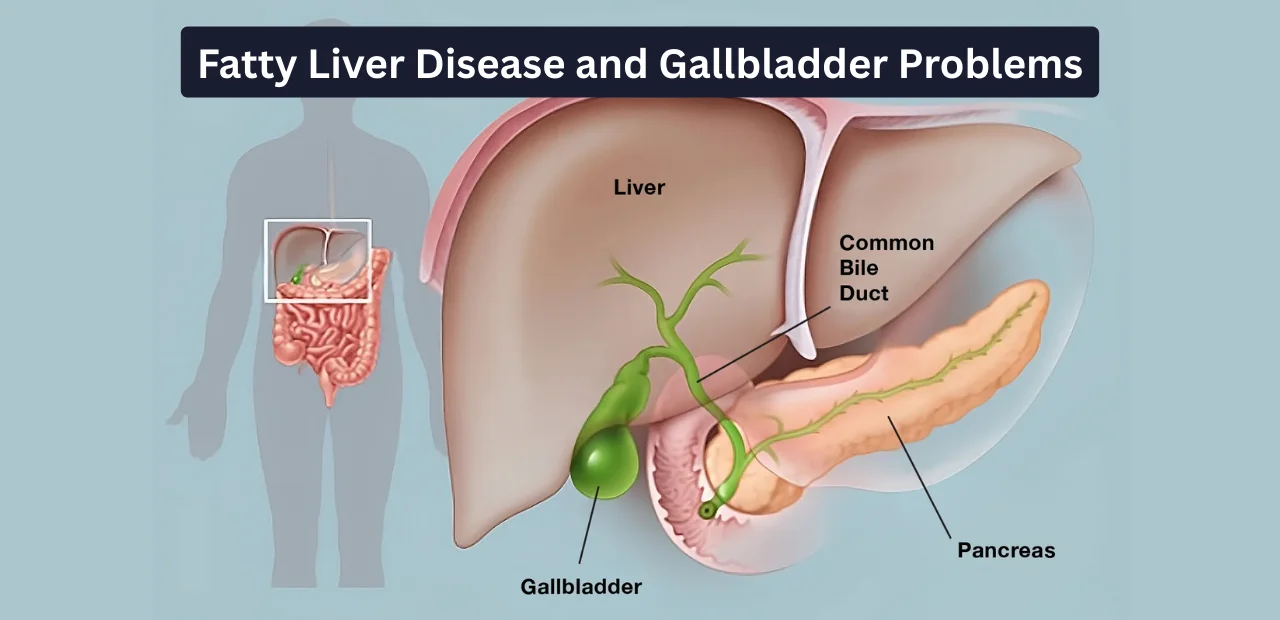
Table of Contents
How the Fatty Liver Disease & Gallbladder Problems Work Together
Role of the liver
The liver produces bile, a fluid that helps digest fats. It also plays a key role in processing nutrients and removing waste from the body.
Role of the gallbladder
The gallbladder stores bile and releases it into the digestive system when needed. If bile flow is disturbed, digestion may become uncomfortable.

Can Fatty Liver Disease Affect the Gallbladder?
Changes in bile production
Fatty liver disease can affect how bile is produced or flows. When bile does not move properly, gallbladder discomfort or related issues may occur.
Shared risk factors
Obesity, poor diet, and metabolic conditions can increase the risk of both fatty liver disease and gallbladder problems. This overlap explains why some people experience both conditions.
Common Symptoms That Overlap
Abdominal pain and bloating
Pain or pressure on the upper right side of the abdomen is common in both liver and gallbladder conditions. Bloating after meals may also occur.
Digestive discomfort
Nausea, indigestion, or discomfort after fatty foods can be linked to bile-related problems. These symptoms should be evaluated if they persist.

Gallbladder Problems Seen With Fatty Liver Disease
Gallstones and inflammation
Some people with fatty liver disease may also develop gallstones or gallbladder inflammation. These conditions can cause sharp pain and digestive symptoms.
When symptoms become more serious
Severe pain, fever, or vomiting may signal gallbladder complications and require urgent medical attention.

Managing Both Conditions Together
Medical evaluation and monitoring
Doctors may recommend imaging tests and blood work to assess both liver and gallbladder health. Monitoring helps guide treatment decisions.
Lifestyle and dietary support
Balanced meals, regular eating patterns, and avoiding very fatty foods can support both liver and gallbladder function. Sudden extreme diets should be avoided.
Conclusion
Fatty liver disease and gallbladder problems can sometimes occur together because of shared functions and risk factors. Overlapping symptoms may make it hard to tell which organ is causing discomfort.
If you experience ongoing abdominal pain or digestive issues, consult a healthcare professional for proper evaluation. Early assessment can help manage both liver and gallbladder health more effectively.
Frequently Asked Questions
Can fatty liver disease cause gallbladder problems?
Fatty liver disease may affect bile flow and share risk factors with gallbladder issues, which can increase the chance of related problems.
What symptoms suggest gallbladder involvement?
Sharp abdominal pain, nausea after fatty meals, bloating, or pain radiating to the back may suggest gallbladder issues.
Are gallstones common in people with fatty liver disease?
Some people may develop gallstones, especially if other risk factors are present. Not everyone with fatty liver disease will have them.
How are gallbladder problems diagnosed?
Doctors often use imaging tests and clinical evaluation to diagnose gallbladder-related conditions.
When should I see a doctor?
If pain is severe, persistent, or accompanied by fever or vomiting, medical attention should be sought promptly.