

Introduction
Hepatobiliary surgery is a specialized field of medicine that focuses on the treatment of diseases affecting the liver, gallbladder, bile ducts, and pancreas. A liver and pancreas specialist, also known as a hepatobiliary surgeon, plays a critical role in diagnosing and managing complex digestive conditions.
Understanding the symptoms of liver disease, gallbladder problems, and pancreas disorders can help patients seek timely treatment and prevent serious complications.
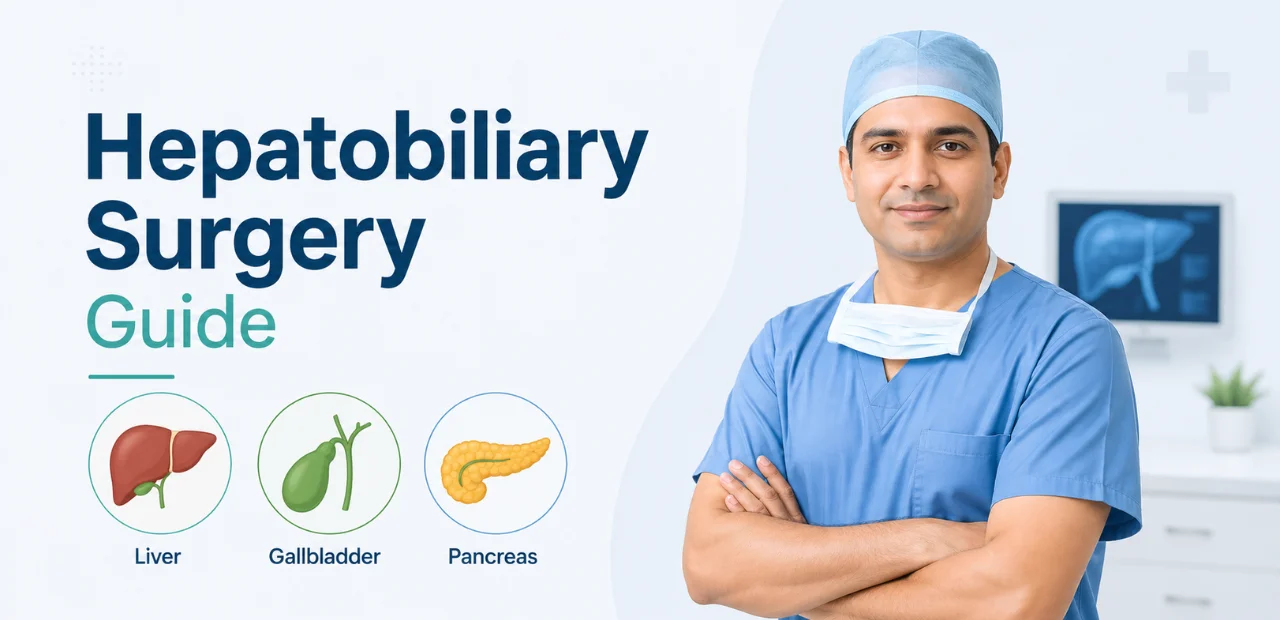
Table of Contents
What is Hepatobiliary Surgery?
Hepatobiliary surgery involves surgical procedures related to:
- Liver
- Gallbladder
- Bile ducts
- Pancreas
A hepatobiliary expert uses advanced techniques, including laparoscopic and robotic surgery, to treat both benign and complex conditions.
Role of a Hepatobiliary Surgeon
A hepatobiliary surgeon is a digestive system specialist trained to manage diseases affecting major abdominal organs.
Key Responsibilities:
- Diagnose liver and pancreas conditions
- Perform complex surgeries
- Manage cancer and non-cancer cases
- Provide long-term treatment plans
👉 They are essential for advanced digestive care.

Liver and Pancreas Specialist
A pancreas specialist and liver expert treat conditions such as:
- Liver disease
- Gallstones
- Pancreatitis
- Tumors
👉 These specialists use both medical and surgical treatments for effective care.
🟢 Symptoms of Liver Disease
Recognizing early signs of liver disease is crucial.
⚠️ Common Symptoms:
- Fatigue
- Yellowing of skin (jaundice)
- Abdominal pain
- Loss of appetite
- Swelling in legs
Early Signs of Liver Disease
Early detection improves outcomes.
🔹 Warning Signs:
- Mild discomfort in upper abdomen
- Nausea
- Weakness
👉 These signs should not be ignored.

Warning Signs of Liver Damage
🚨 Seek medical attention if you notice:
- Persistent pain
- Dark urine
- Yellow eyes
- Unexplained weight loss
👉 These may indicate serious liver damage.
Liver Problems Causes
Common causes include:
- Viral infections (hepatitis)
- Alcohol consumption
- Fatty liver disease
- Obesity
👉 Identifying the cause helps guide treatment.
🟢 Gallbladder Disease & Treatment
Gallbladder Symptoms
- Severe abdominal pain
- Nausea
- Bloating
- Indigestion
Gallstones Treatment
Gallstones are a common condition.
Treatment Options:
- Medication (in early cases)
- Laparoscopic gallbladder removal
👉 Surgery is often the most effective solution.
Gallbladder Disease Treatment
Treatment depends on severity:
- Lifestyle changes
- Medication
- Surgical removal
🟢 Pancreas Disease Treatment
Pancreas Problems Symptoms
- Severe abdominal pain
- Digestive issues
- Weight loss
Pancreas Specialist Care
A pancreas specialist treats:
- Pancreatitis
- Pancreatic tumors
- Digestive disorders
👉 Early treatment improves survival and quality of life.

Hepatobiliary Disease Symptoms & Treatment Table
| Condition | Common Symptoms | Possible Causes | Treatment Options |
|---|---|---|---|
| Liver Disease | Jaundice, fatigue, abdominal pain, swelling | Hepatitis, fatty liver, alcohol damage | Medication, lifestyle changes, liver surgery |
| Gallbladder Disease | Severe abdominal pain, bloating, nausea | Gallstones, infection, inflammation | Medication, laparoscopic gallbladder surgery |
| Pancreas Disorders | Digestive issues, weight loss, stomach pain | Pancreatitis, tumors, digestive disorders | Medical treatment, pancreas surgery |
| Gallstones | Pain after eating, nausea, indigestion | Cholesterol imbalance, obesity | Gallstones removal surgery |
| Liver Damage | Yellow eyes, dark urine, weakness | Viral infections, alcohol, obesity | Liver specialist care, surgery |
| Pancreatitis | Severe upper abdominal pain, vomiting | Alcohol use, gallstones | Medication, hospitalization |
🟢 When to See a Liver Specialist
You should consult a liver specialist if:
- Symptoms persist for more than a few days
- You have a history of liver disease
- You experience unexplained weight loss
👉 Early consultation prevents complications.
🟢 Liver Treatment Options
Treatment depends on the condition.
✅ Options Include:
- Medication
- Lifestyle changes
- Minimally invasive surgery
- Liver surgery
Types of Liver Surgery
- Tumor removal
- Liver resection
- Liver transplant (in severe cases)
👉 Advanced techniques improve success rates.
🟢 Hepatobiliary Diseases Treatment
Hepatobiliary diseases include conditions affecting:
- Liver
- Gallbladder
- Pancreas
Treatment Methods:
- Medical management
- Minimally invasive surgery
- Advanced surgical procedures
🟢 Conclusion
Hepatobiliary surgery plays a vital role in treating complex digestive diseases. From identifying early signs of liver disease to managing gallbladder and pancreas conditions, a skilled hepatobiliary surgeon ensures proper diagnosis and treatment.
👉 If you experience symptoms related to liver, gallbladder, or pancreas problems, consult a specialist for timely care.
❓ FAQs
1. What is hepatobiliary surgery?
It is a specialized surgery for liver, gallbladder, and pancreas diseases.
2. When should I see a liver specialist?
If you have persistent symptoms like pain, jaundice, or fatigue.
3. What are common liver disease symptoms?
Fatigue, jaundice, abdominal pain, and swelling.
4. Is gallbladder surgery safe?
Yes, laparoscopic surgery is safe and widely used.
5. What does a pancreas specialist treat?
Pancreatitis, tumors, and digestive disorders.