

Introduction
Becoming a pancreatic surgeon is one of the most challenging yet rewarding career paths in medicine. These specialists perform complex, life-saving procedures and play a crucial role in treating serious conditions like pancreatic cancer.
If you’re considering this career or simply want to understand it better, this guide covers everything from pancreatic surgeon salary to training and career progression.
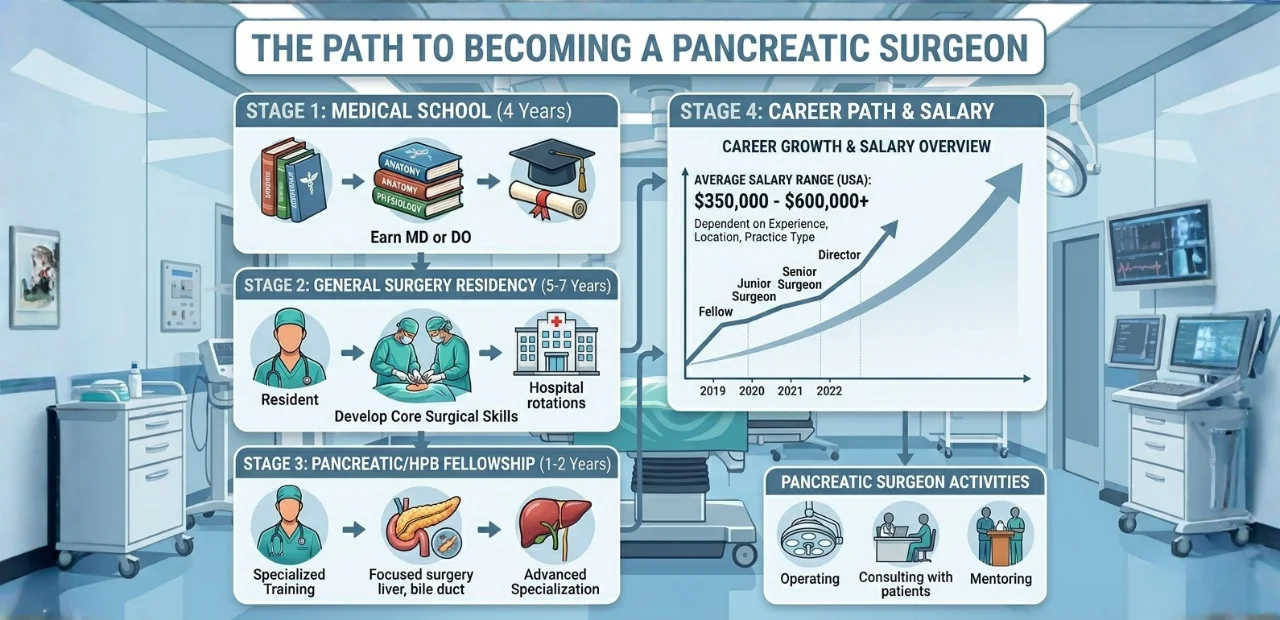
Table of Contents
Who Is a Pancreatic Surgeon?
A pancreatic surgeon is a highly specialised doctor trained to perform surgery on the pancreas and surrounding organs. Most professionals in this field are also trained as hepatobiliary (HPB) surgeons.

Education & Training Path
Becoming a pancreatic surgeon requires years of education and training:
Step 1: Medical Degree
Complete a medical degree (MBBS or equivalent).
Step 2: General Surgery Residency
Gain hands-on surgical experience through a general surgery training program.
Step 3: Specialized Fellowship
Complete advanced training in hepatobiliary or pancreatic surgery.
Step 4: Continuous Learning
Surgeons must stay updated with new technologies such as robotic surgery and minimally invasive techniques.
Pancreatic Surgeon Salary
The pancreatic surgeon salary varies depending on experience, location, and expertise.
Average Salary Range:
- Entry-level: Moderate income with growth potential
- Mid-career: Significantly higher earnings
- Experienced specialists: High earning potential
Pancreatic surgeons are among the highest-paid medical professionals due to the complexity of their work.
Factors Affecting Salary
Several factors influence how much a pancreatic surgeon earns:
- Years of experience
- Level of specialisation
- Hospital or private practice
- Country and healthcare system
- Surgical volume and reputation
Skills Required to Become a Pancreatic Surgeon
Successful pancreatic surgeons possess:
- Advanced surgical skills
- Strong decision-making ability
- Attention to detail
- Emotional resilience
- Ability to work under pressure

Career Opportunities
A pancreatic surgeon can work in:
- Hospitals and medical centers
- Cancer treatment institutes
- Academic and research institutions
- Private surgical practice
Challenges in This Career
While rewarding, this career comes with challenges:
- Long years of training
- High responsibility
- Physically and mentally demanding work
- Managing complex and high-risk cases
Why Choose This Career?
Despite the challenges, many choose this path because:
- Opportunity to save lives
- High respect in the medical field
- Strong earning potential
- Continuous learning and advancement

Call to Action
If you are passionate about medicine and surgery, becoming a pancreatic surgeon can be a fulfilling and impactful career choice.
Frequently Asked Questions
How long does it take to become a pancreatic surgeon?
It typically takes over 10–15 years of education and training.
Is pancreatic surgery a good career?
Yes, it offers high earning potential and the opportunity to make a real difference.
What is the salary of a pancreatic surgeon?
Salary varies widely but is generally high due to the specialized nature of the field.